
A Redirection JavaScript utilise un petit bout de code JavaScript côté navigateur pour rediriger les visiteurs vers la page de destination, au lieu d'une redirection HTTP. À l'instar d'un Redirection via la balise meta refresh, le visiteur charge brièvement une véritable page HTML — mais la redirection elle-même est déclenchée par du code JavaScript, et non par le mécanisme de redirection du navigateur.
Pourquoi est-ce important ? Résilience face aux bots et à la prélecture
Les infrastructures web modernes regorgent de systèmes automatisés qui “ cliquent ” sur des liens sans intervention humaine :
- Robots des moteurs de recherche qui suivent les liens pour les indexer ;
- Outils de vérification des liens qui permettent de vérifier que les URL ne sont pas hors service ;
- Logiciels de sécurité pour les e-mails qui analysent chaque lien contenu dans les e-mails reçus afin de détecter les tentatives d'hameçonnage ;
- Préchargement du navigateur des fonctionnalités qui récupèrent les pages susceptibles d'être consultées ensuite avant même que l'utilisateur ne clique ;
- Les créateurs de contenu sur les réseaux sociaux qui suivent des liens pour générer des aperçus.
La plupart de ces systèmes ne prennent pas en charge JavaScript. Ainsi, lorsqu'ils rencontrent un lien de redirection JavaScript, ils :
- Récupérer la page d'en-tête ;
- N'exécutez pas le code JS ;
- Ne continuez pas jusqu’à la destination ;
- Ne soyez pas comptabilisé comme un clic dans vos rapports.
Le résultat : Vos rapports indiquent des clics effectués par de vrais utilisateurs, et non par des robots d'indexation.
Quand utiliser une redirection JavaScript ?
- Campagnes par courrier électronique — Les outils modernes de sécurité des e-mails “ cliquent ” sur chaque lien contenu dans votre message avant sa livraison afin de détecter d'éventuels logiciels malveillants. La redirection via JavaScript empêche ces analyses de gonfler le nombre de clics ;
- Liens d'affiliation à fort trafic — Sinon, les robots et la prélecture risquent de noyer les clics réels sous le bruit ;
- Partout où la pollution causée par les robots est un sujet de préoccupation — Surtout quand Filtrage des bots et des adresses IP ne détecte pas tout.
Quand ne pas utiliser la redirection JavaScript
- Quand le capital SEO compte — Les redirections JS ne transmettent pas correctement l'autorité SEO. Utilisez une redirection 301 ;
- Lorsque certains visiteurs ont désactivé JavaScript — C'est rare aujourd'hui, mais cela peut arriver. Les visiteurs dont le navigateur ne prend pas en charge JavaScript verront une page vide (ou un lien de secours, selon votre configuration) au lieu d'être redirigés ;
- Pour les actions de formulaire — Les redirections JavaScript ne permettent pas de conserver les données POST.
Mise en place
- Modifier le lien.
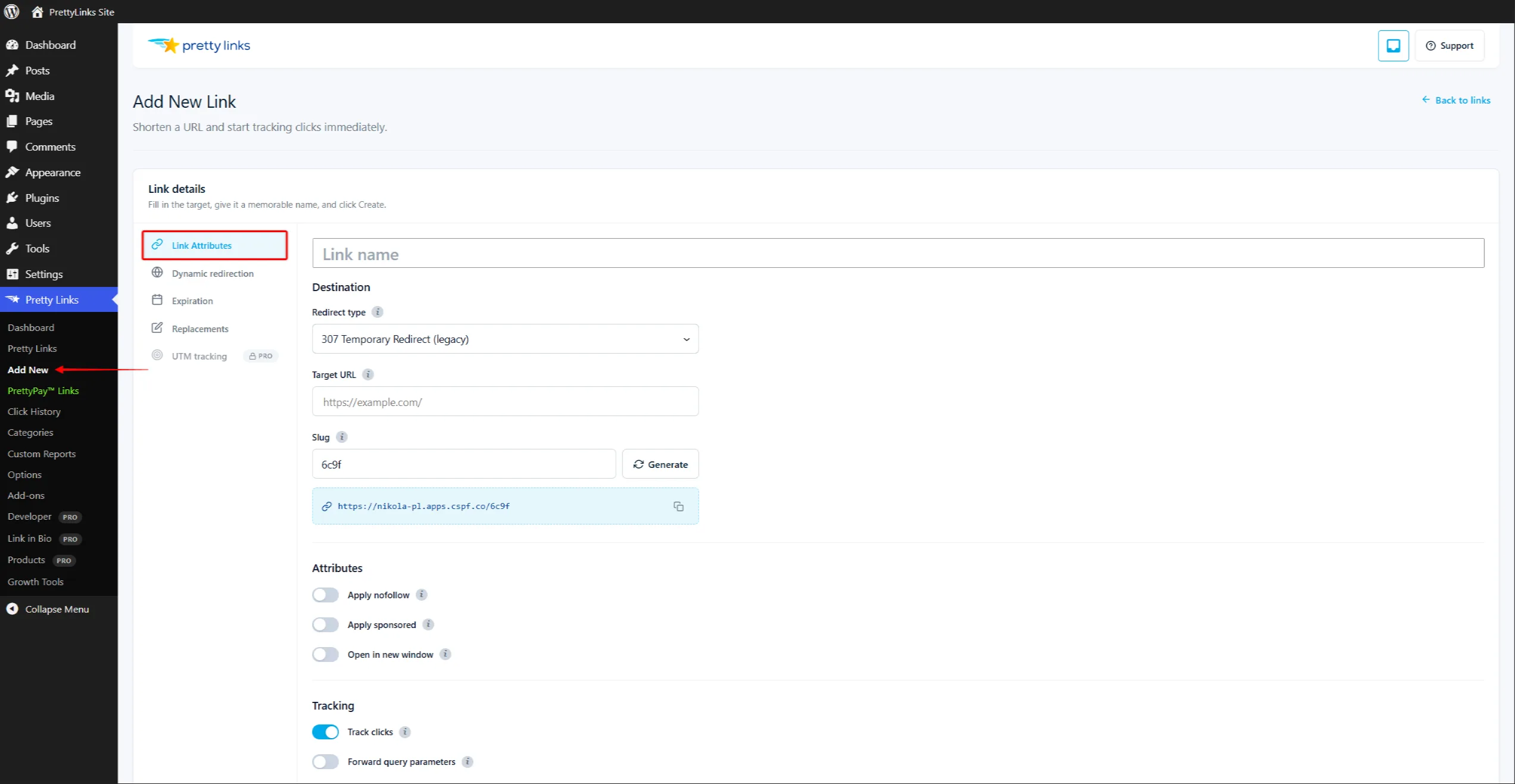
- Dans le cadre de la Type de redirection menu déroulant, sélectionnez Redirection JavaScript.
- Cliquez sur Mise à jour.
Testez le lien depuis une session de navigation normale : il devrait rediriger comme n'importe quel autre lien. Ce changement de comportement est imperceptible pour les utilisateurs ; seuls les robots constatent une différence.
Ce que voient les visiteurs
Les visiteurs chargent brièvement la page d'encapsulation, puis sont redirigés par JavaScript. Avec une connexion rapide, ce phénomène est à peine perceptible. Avec une connexion lente, ils peuvent voir une page blanche pendant une fraction de seconde de plus qu'avec un code 302.
La page d'encapsulation permet également aux outils d'analyse côté client (Google Analytics, Facebook Pixel) de se déclencher — un avantage identique à celui d'un Redirection via la balise meta refresh.
Combinaison avec les pixels de suivi
Une pratique courante : utilisez une redirection JavaScript pour le trafic payant, lorsque la présence de bots risquerait de fausser l'attribution des conversions, et associez-la à des pixels de conversion sur votre page de destination. Le visiteur arrive sans encombre sur la page, votre suivi se déclenche et les bots n'interfèrent pas.
Combinaison avec d'autres fonctionnalités
La redirection JavaScript fonctionne avec :
Il n'est pas compatible avec Pixel de suivi ou Pretty Bar — il s'agit là de comportements alternatifs. Choisissez un seul type de redirection par lien.