
Les catégories constituent le principal moyen d'organiser vos « pretty links » en groupes cohérents. Elles sont hiérarchisées — ce qui signifie qu'une catégorie peut comporter des sous-catégories —, ce qui vous permet de reproduire la structure de votre environnement réel avec autant de niveaux que nécessaire.
Les catégories sont disponibles sur le Niveau débutant et au-delà.
Création de catégories
Aller à Tableau de bord > Pretty Links > Catégories.
Vous verrez s'afficher une liste des catégories existantes, ainsi qu'un formulaire permettant d'en créer une nouvelle. Pour ajouter une catégorie :
- Saisissez un Nom (ce que vous verrez dans les menus déroulants et les listes).
- (Facultatif) Définir un Parent si cette catégorie doit être subordonnée à une autre.
- (Facultatif) Ajouter un Description pour que vous vous souveniez à quoi sert cette catégorie.
- Cliquez sur Ajouter une catégorie.
La nouvelle catégorie apparaît immédiatement dans la liste, prête à être attribuée à des liens.
Hiérarchie
Les catégories peuvent être imbriquées. Par exemple :
- Affiliés
- Affiliés d'hébergement
- Partenaires de l'outil de messagerie électronique
- Partenaires de la formation
- Liens internes
- Téléchargements de ressources
- Redirections après connexion
- Campagnes
- 1er trimestre 2026
- Lettre d'information
- Médias sociaux
- 2e trimestre 2026
- Série de webinaires
- 1er trimestre 2026
Il n'y a pas de limite stricte en termes de profondeur, mais deux ou trois niveaux suffisent généralement. Les hiérarchies plus profondes deviennent difficiles à parcourir.
Attribution de catégories aux liens
Deux façons :
- Par lien — Lorsque vous créez ou modifiez un lien, sélectionnez une ou plusieurs catégories parmi les Catégories sélecteur dans le Organisation panneau. Vous pouvez également créer une nouvelle catégorie directement depuis l'éditeur de liens, sans quitter la page.
- En vrac — Dans la liste « Pretty Links », cochez les cases situées à côté des liens que vous souhaitez reclasser, puis sélectionnez Ajouter des catégories (ou Supprimer les catégories) dans le menu déroulant « Actions groupées », sélectionnez les catégories, puis cliquez sur Postuler.
Un lien peut appartenir à plusieurs catégories — les catégories ne constituent pas un classement strict de type « un-à-un ». Dans la pratique, la plupart des sites choisissent une seule catégorie principale par lien et utilisent balises pour les thèmes transversaux, mais le modèle de données ne vous impose aucune restriction.
Nombre de liens
Chaque catégorie dans le Catégories L'écran affiche le nombre de liens qu'il contient. C'est pratique pour repérer :
- Catégories que vous avez créées et que vous n'avez jamais utilisées (nombre = 0) ;
- les catégories qui sont devenues trop volumineuses et qu'il serait peut-être judicieux de scinder ;
- Catégories correspondant à un thème naturel dans votre collection de liens.
Le nombre correspond au nombre de liens affecté directement à cette catégorie précise — les liens figurant dans les sous-catégories ne sont pas pris en compte dans le total de la catégorie parente.
Filtrer la liste des liens par catégorie
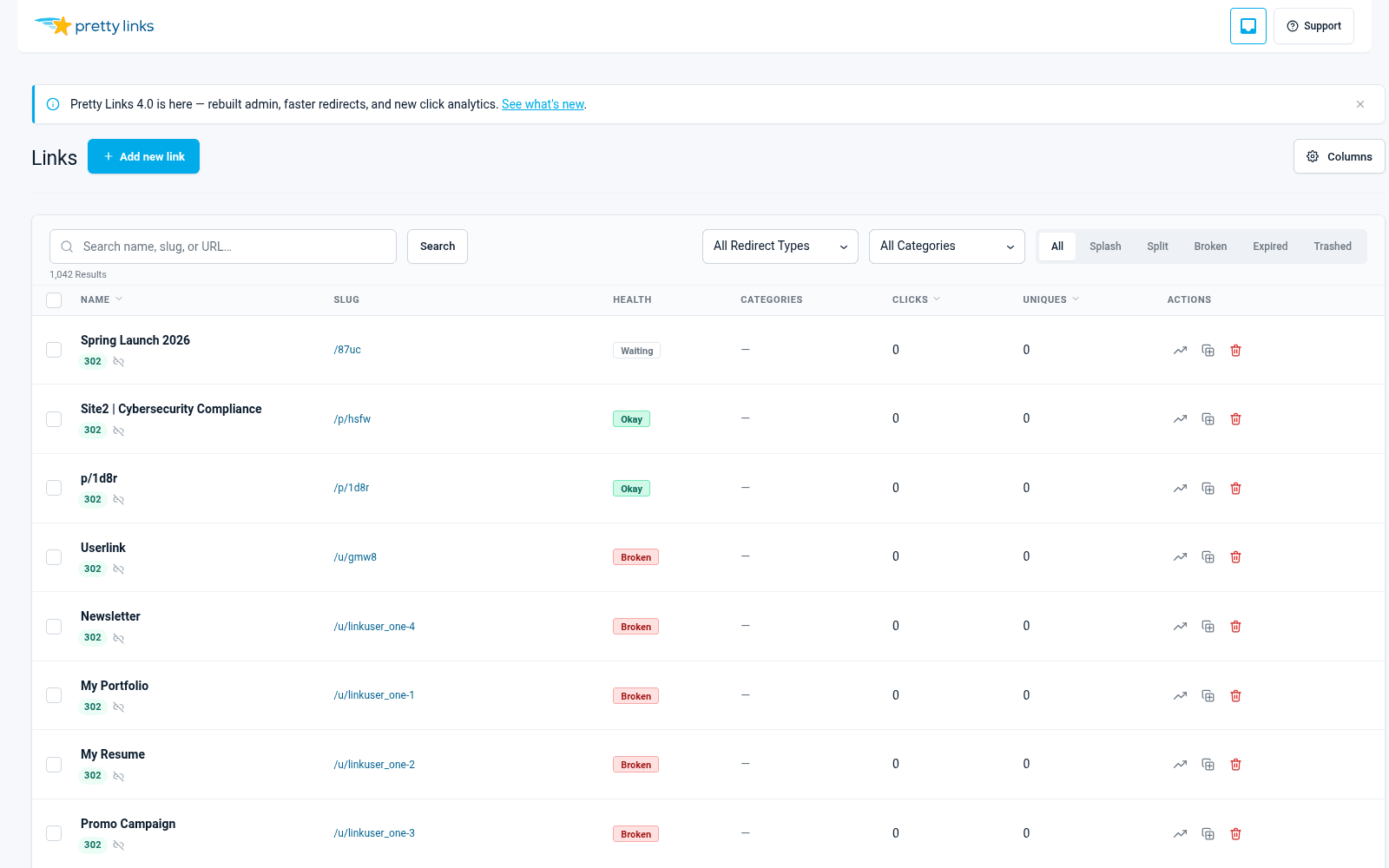
La liste « Pretty Links » comporte un filtre par catégorie en haut de la page. Sélectionnez une catégorie dans le menu déroulant pour afficher uniquement les liens de cette catégorie.
Vous pouvez associer le filtre “ Catégorie ” à d'autres filtres (recherche, type de redirection, statut) pour obtenir des sous-ensembles très précis — par exemple, « toutes les redirections 302 de la catégorie Affiliés que j'ai créées ce mois-ci ».”
Modification et suppression de catégories
Extrait de la Catégories sur l'écran, passez la souris sur n'importe quelle catégorie, puis cliquez Editer pour modifier son nom, sa société mère ou sa description.
Pour supprimer une catégorie, cliquez sur Supprimer sous ce nom. Les liens qui figuraient dans cette catégorie ne sont pas supprimés ; ils ne sont simplement plus associés à cette catégorie (toutes les autres catégories ou balises auxquelles ils étaient associés sont conservées). Vous pouvez leur attribuer une nouvelle catégorie par la suite.
La suppression d'une catégorie parente n'entraîne pas pas non seulement il supprime ses sous-catégories, mais il ne leur attribue pas non plus automatiquement un nouveau parent : les éléments enfants restent en place, mais sans référence parentale. L'écran “ Catégories ” les affichera alors comme « orphelins » ; choisissez un nouveau parent (ou définissez-les sur « aucun parent ») pour régulariser la situation.
Descriptions
Utilisez les descriptions de catégories pour préciser à quoi sert chaque catégorie et indiquer les règles à respecter. Votre “ moi futur ” (ou un collègue) appréciera davantage une description telle que « Liens d'affiliation vers les outils que nous utilisons nous-mêmes — ne jamais créer de lien vers des ressources que nous ne recommandons pas » plutôt qu'un simple nom. Affiliés.
Les descriptions apparaissent dans l'écran « Catégories », mais ne sont pas visibles pour les visiteurs qui cliquent sur vos liens.
Conseils
- Commencez petit. Trois à cinq catégories principales suffisent amplement pour la plupart des sites. N'en ajoutez d'autres que si vous en ressentez le besoin ;
- Soyez cohérent. Choisissez un style de nommage (majuscules en début de mot, tout en minuscules, etc.) et respectez-le ;
- Utilisez le champ « Description ». Une description en une phrase pour chaque catégorie permet d'éviter toute confusion six mois plus tard ;
- Associer à des balises pour les questions transversales. N’essayez pas de tout englober uniquement à l’aide de catégories ;
- Réorganisez-vous quand ça fait mal. Si vous ne parvenez plus à vous souvenir dans quelle catégorie se trouve un lien, c'est le signe que votre structure s'est désorganisée. Consacrez une heure à la remettre en ordre.