

Conteúdo
Toda profissão tem suas ferramentas de trabalho:
🧑🍳 Os chefs mantêm cadernos de receitas para que possam se lembrar do que funcionou, do que não funcionou e de quais ajustes foram incluídos no cardápio final.
Os designers de interiores mantêm pastas no Pinterest repletas de layouts de cômodos, texturas e padrões de cores que eles consultam sempre que um novo projeto exige uma nova direção.
Os comediantes mantêm cadernos de piadas cheios de frases ouvidas, trechos mal formados e observações que muitas vezes se tornam a piada de uma apresentação futura.
🏛️ Os arquitetos mantêm recortes de edifícios, materiais e detalhes que viram no mundo e que desejam utilizar em projetos futuros.
✍️ Os jornalistas mantêm cadernos de fontes de citações, entrevistas e detalhes de fundo que coletaram ao longo do tempo, sabendo que a história certa acabará por exigi-los.
O marketing de afiliados tem sua própria versão disso: uma coleção contínua de textos de marketing que você estudou, salvou e consultou ao longo do tempo.
Esse é o recurso silencioso por trás de uma cópia de afiliado consistentemente boa e é o que evita que você tenha que reinventar a roda toda vez que se senta para escrever.
Esse hábito começa com algo que a maioria dos afiliados ainda não tem: um arquivo de furto próprio.
O que é um Swipe File?
Um arquivo de furto é uma coleção pessoal de exemplos de marketing que você salvou porque algo neles funcionou.
É qualquer coisa com que você se deparou como leitor, comprador ou rolador que o fez parar, clicar, abrir ou comprar - e que você guardou porque sabia que valeria a pena estudar mais tarde.
A parte útil não é a coleção em si. É o que ela proporciona na próxima vez que você estiver preso em uma promoção e perceber que já tem uma centena de exemplos de como outras pessoas lidaram com o exato momento à sua frente:
- Uma linha de assunto que o fez abrir um e-mail que não estava planejando ler.
- A Descrição do produto que fez você adicionar algo ao carrinho antes mesmo de pensar nisso.
- A legenda social que, na verdade, o interrompeu no meio da rolagem.
Você não está coletando esse material de marketing para copiá-lo. Você o está coletando porque a parte mais difícil de escrever uma promoção não é escrever - é encontrar um lugar para começar. Um arquivo de passagem garante que você sempre tenha um.
Swipe File vs. Swipe Copy (porque os afiliados lidam com ambos)
Esses dois termos são usados como se significassem a mesma coisa, mas não significam.
- Um arquivo de passagem é seu. Você o constrói. Ele vive onde você quiser e contém o conteúdo que você decidir que vale a pena salvar.
- Cópia deslizante é o que uma marca lhe entrega quando você se junta a ela. programa de afiliados. São os e-mails pré-escritos, as legendas sociais, a linguagem de bônus e os resumos de produtos que ficam dentro do portal do afiliado.
Os dois estão relacionados, mas fazem trabalhos diferentes. A cópia digitalizada é um ponto de partida que outra pessoa lhe deu. Um swipe file é uma referência de trabalho que você criou para si mesmo.
O que deve constar no arquivo de furto de um profissional de marketing de afiliados
Os profissionais de marketing de afiliados precisam de um tipo específico de arquivo. Nem tudo que vale a pena salvar deve estar no seu, e saber o que manter e o que ignorar é o que faz a diferença entre um arquivo que você realmente usa e um que apenas fica parado e acumula poeira.
Aqui está o que eu realmente colocaria em um arquivo de afiliados:
Suas próprias promoções de melhor desempenho
Essa é a coisa mais valiosa em seu arquivo porque já é 100% VOCÊ. Salve-os, anote o que os fez funcionar e use-os como sua própria biblioteca de modelos.
📊 PrettyLinks rastreamento de cliques mostra exatamente quais promoções baseadas em furto estão gerando o maior número de cliques em links. Assim, ao decidir quais de suas próprias promoções valem a pena salvar e reutilizar, você estará trabalhando com dados, e não com intuição.
Veja como o rastreamento de links funciona no PrettyLinks →
Descrições de produtos que fazem você querer comprar algo
Se a descrição de um produto o atraiu, guarde-a. O ângulo, a estrutura, as palavras específicas que eles usaram para enquadrar o benefício - tudo isso é útil quando você está escrever sobre um produto semelhante mais tarde.
Linguagem de divulgação que não prejudica a vibração
As divulgações da FTC são obrigatórias, e a maioria delas se assemelha a um rodapé jurídico. Alguns criadores descobriram como divulgar de uma forma que pareça natural e até aumenta a confiança.
Comparação e conteúdo “vs.”
As postagens de comparação e as análises “X vs. Y” são alguns dos conteúdos de maior conversão que um afiliado pode escrever, mas também são os mais difíceis de serem feitos sem parecerem tendenciosos.
Salve as que parecerem justas e como elas se encaixam em uma recomendação que permita que o leitor faça a decisão final.
Ganchos de e-mail e linhas de assunto de marcas que você realmente abre
Não aqueles que você acha que são inteligentes - aqueles que Consegui que você abrisse. Há uma diferença, e o seu arquivo de furto deve refletir o que realmente funcionou com você.
Legendas sociais que interromperam sua rolagem
Especialmente de criadores de nichos adjacentes ao seu. As legendas são onde a voz aparece mais, e estudar legendas sociais fora de seu próprio nicho é uma das maneiras mais rápidas de ampliar o leque do que você é capaz de escrever.
Estruturas de páginas de destino
Não apenas o título ou o herói - a página inteira. Como eles sequenciam o argumento, onde colocam a prova social, com o que eles lideram, O que eles salvam para depois. As capturas de tela de página inteira são mais úteis aqui do que trechos isolados.
Quando você começa a colecionar com esse tipo de intenção, seu arquivo de furto deixa de ser uma gaveta de lixo e passa a ser a coisa que você realmente procura sempre que uma nova promoção chega ao seu prato.
Como criar seu arquivo Swipe de cópia de afiliado
Os melhores arquivos de furto são criados passivamente, em segundo plano, ao longo de meses e anos - moldados por afiliados que ficam atentos ao marketing ao seu redor e salvam o que se destaca no momento.
Comece com o que você já consome
Você já está em dezenas de listas de e-mail, em um punhado de comunidades e compra produtos do seu nicho regularmente.
A matéria-prima já está chegando até você todos os dias. Você não precisa procurar exemplos - você precisa parar de deixar passar os bons exemplos.
Economize na captura, não na intenção
Os melhores acréscimos ao seu arquivo de furto acontecem no momento em que você reage a eles. Se um e-mail o fizer parar, salve-o imediatamente. Se uma legenda o fizer pensar duas vezes, faça uma captura de tela antes de continuar rolando a tela.
Os arquivos de furto criados com base em “Vou estudar exemplos de marketing neste fim de semana” raramente são criados. Os arquivos de furto criados com base em “isso é bom, salve-o” são criados automaticamente.
Escolha um lugar para guardar tudo
Notion, Apple Notes, um Google Doc, uma pasta de capturas de tela - realmente não importa a ferramenta que você usa. O que importa é que tudo o que você salva vai para o mesmo lugar, portanto, quando precisar encontrar algo mais tarde, você saberá exatamente onde procurar.
Organize por caso de uso, não por formato
“E-mails” como categoria é quase inútil quando você está tentando encontrar algo. “E-mails que eu realmente abriria” ou “Linhas de assunto que me deixaram curioso” lhe dão algo com que trabalhar.
Pense nos momentos em que você vai usar esse arquivo - lançamento de um produto, redação de uma publicação de comparação, elaboração de uma pilha de bônus - e crie um rótulo para esses momentos.
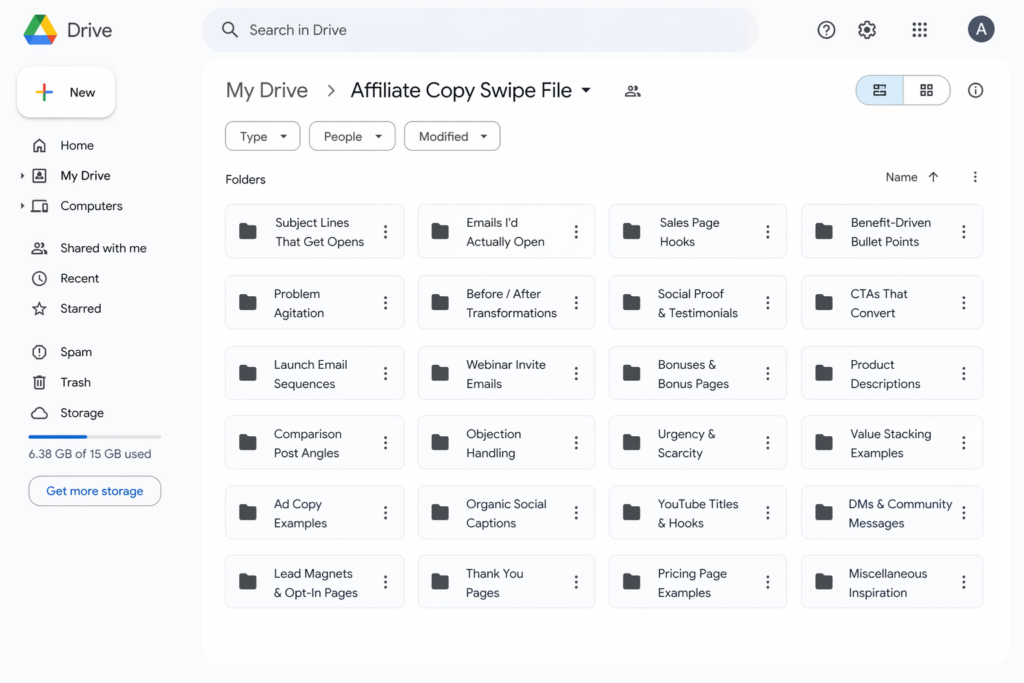
Esse é o sistema completo. Reúna o que lhe chama a atenção, mantenha-o em um único lugar e examine-o antes de redigir.
Os afiliados com as promoções de melhor desempenho não são mais criativos do que todos os outros - eles apenas observam sua caixa de entrada, seu feed e seus próprios hábitos de compra há anos e se apegam ao que se destaca.
Comece a criar seu arquivo Swipe
A parte mais difícil de um arquivo de furto é começar um, e é por isso que a melhor coisa que você pode fazer agora é abrir a ferramenta que achar mais fácil, dar um nome a ela e concluir.
Não pense demais na configuração. Ter um lugar para salvar o próximo item que chamar sua atenção é o único requisito.
A partir daí, é uma construção lenta. O próximo e-mail que o faz parar é salvo. A próxima legenda que o faz clicar é capturada na tela. A próxima descrição de produto que o faz pegar a carteira é marcada como favorita.
Espere um mês e você abrirá esse arquivo e perceberá que construiu uma das ferramentas mais valiosas do seu arsenal de marketing de afiliados - uma referência atualizada do que realmente move o seu público, no seu nicho, por meio dos seus próprios olhos como leitor e comprador.






Deixe um comentário