

Contenu
Le choix d'une niche est l'une des plus grandes décisions que vous aurez à prendre en tant que spécialiste du marketing d'affiliation. Les conseils pour en choisir une semblent assez simples : choisissez un sujet qui vous intéresse, un sujet sur lequel vous en savez assez pour écrire, et construisez à partir de là.
Mais dès que vous commencez à chercher, chaque hobby, chaque intérêt et ce que vous pensiez être une “idée unique” font déjà l'objet de centaines de sites et de soi-disant experts. Tout semble pris.
La remise en forme... saturé.
Voyager... saturé.
Soins aux animaux... saturé.
Tech... totalement saturé.
La bonne nouvelle, c'est que ces niches saturées ne sont pas interdites d'accès : c'est là que se trouve votre opportunité, mais pas au niveau où vous l'envisagiez.
Recherche une niche à faible concurrence nécessite d'approfondir les sujets qui vous passionnent et d'utiliser la recherche par mots-clés pour découvrir les ouvertures qu'ils recèlent - et les publics mal desservis qui attendent toujours que quelqu'un écrive pour eux.
Cet article définit ce qu'est une niche “à faible concurrence”, pourquoi ces petites niches valent la peine que vous y consacriez du temps et comment en choisir une pour vous y engager. Ainsi, vous pourrez cesser d'essayer de rivaliser avec tout le monde et commencer à dominer le coin d'une niche qui est réellement à vous.
Qu'est-ce qu'un créneau à faible concurrence ?
Une niche à faible concurrence est un domaine spécifique dans lequel peu de sites web établis se classent pour les mots-clés pertinents.
Une telle définition ne semble pas très prometteuse. L'instinct pousse à penser que si personne d'autre ne travaille dans un espace, c'est qu'il y a une raison : pas de trafic, pas d'argent, pas de public.
Mais c'est rarement le cas. Le plus souvent, il s'agit d'un espace dont les grands éditeurs ne se sont pas préoccupés, ce qui est exactement le genre de choses que l'on ne peut pas faire. ouvrir un site d'affiliation ciblé peut s'y installer.
Les spécialistes du marketing d'affiliation qui ciblent des niches à faible concurrence ont tendance à se classer plus rapidement, à gagner plus vite la confiance de leur public et à générer des revenus sans se laisser distancer par de grandes marques ou des sites bien financés.
Un exemple de niche à faible concurrence
Supposons que vous soyez dans la niche du marketing d'affiliation des aliments et des boissons et que vous ayez réduit votre champ d'action à des sujets relevant de la sous-niche du café. C'est déjà un bon début, mais le café reste un domaine assez vaste.
De grands noms comme Bon Appétit, Wirecutter et Forbes ont écrit sur tous les types de café pour tous les types de buveurs de café - suffisamment longtemps pour occuper la première page de Google pour presque tout ce que vous voudriez écrire. Vous n'avez donc pas d'ouverture réelle pour percer.
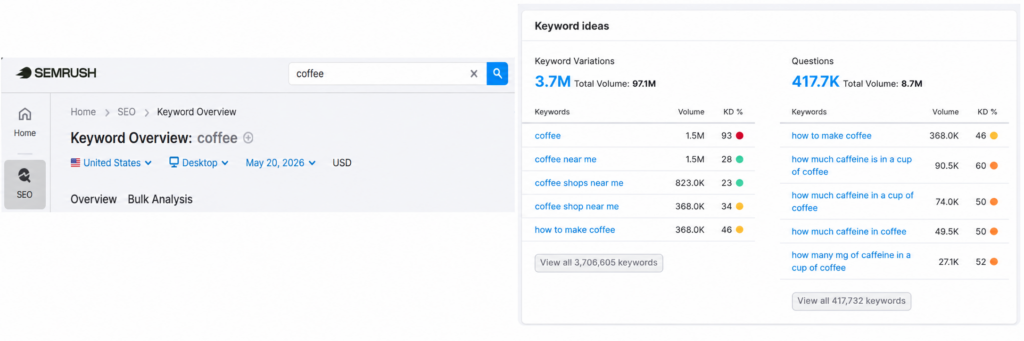
Mais il faut le restreindre davantage pour obtenir quelque chose comme Cadeaux pour les amateurs de café, Les résultats de la recherche sont complètement différents. De petits blogs élaborent des guides de cadeaux pour les fêtes de fin d'année, des fils de discussion Reddit de personnes demandant ce qu'il faut offrir au snob du café dans leur vie, et des messages de forum remplis de questions douloureuses auxquelles un bon guide d'achat pourrait répondre.
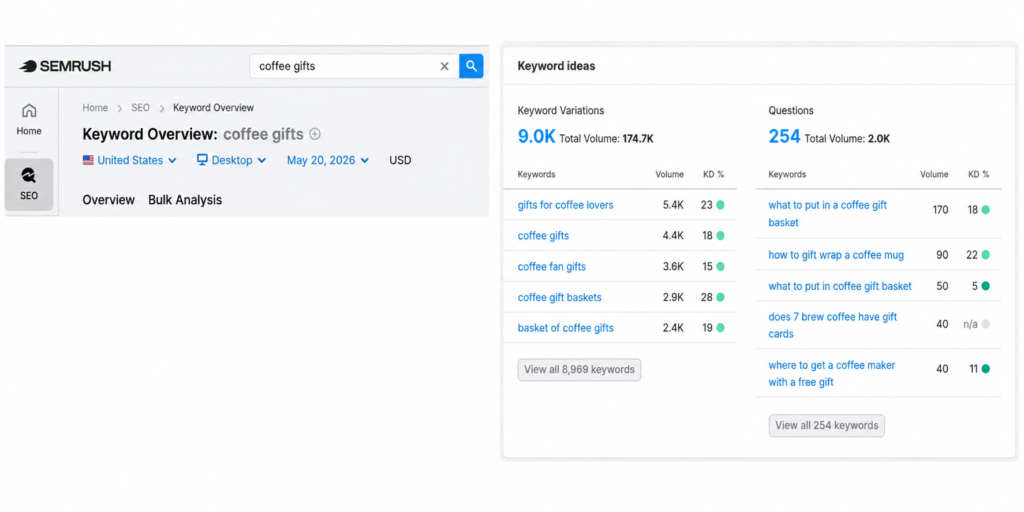
C'est l'idée même d'une niche à faible concurrence. La popularité du sujet général n'a pas d'importance. Le café est un sujet très vaste, mais certains de ses aspects sont encore très accessibles, avec des mots-clés et des lecteurs pour lesquels personne d'autre n'écrit.
Les avantages du choix d'un créneau à faible concurrence
À première vue, le choix d'un créneau peu concurrentiel peut donner l'impression que vous choisissez une version réduite d'une opportunité plus importante.
En réalité, c'est presque le contraire - et les avantages de la construction d'un tel système commencent à se manifester plus tôt que vous ne l'imaginez.
- Vous commencez à vous classer en quelques mois, et non des années. Un article solide dans un créneau peu concurrentiel peut atteindre la première page en trois à six mois - parfois plus tôt - ce qui signifie que les clics et les commissions commencent à s'accumuler peu de temps après la mise en ligne de l'article, et non pas des années plus tard.
- Vous devenez plus rapidement l'autorité. Lorsque vous êtes l'une des premières voix à couvrir un sujet, vous n'êtes pas en concurrence pour attirer l'attention, vous façonnez la conversation et Google commence à considérer votre site comme une source fiable vers laquelle les lecteurs reviennent.
- Votre niche peut évoluer avec vous. Le bon créneau à faible concurrence est suffisamment vaste pour continuer à produire du contenu utile pendant des années, avec des domaines connexes que vous pouvez développer un par un - chacun d'entre eux pouvant encore être battu, et chacun renforçant l'autorité que vous avez déjà bâtie.
Un classement et une autorité plus rapides, ainsi qu'une croissance continue sont les éléments qui permettent à une niche peu concurrentielle de générer du trafic, de la confiance et des revenus, alors qu'une niche surpeuplée ne peut pas le faire.

Les liens de marque signalent l'autorité. Ce n'est pas le cas des URL laides. PrettyLinks dissimule chaque lien d'affilié sous une forme qui donne l'impression qu'il appartient à votre site.
Un créneau à faible concurrence vous convient-il ?
Les niches à faible concurrence ne sont pas réservées à un seul type d'affilié. Elles sont très intéressantes pour tous les acteurs du secteur.
- Vous êtes novice en matière de marketing d'affiliation. En commençant plus petit, vous ne vous lancez pas dans un combat que vous ne pouvez pas gagner dès le premier jour. Vous construisez quelque chose qui vous appartient dès le départ.
- Vous êtes déjà un expert dans un domaine spécifique. Lorsque vous en savez plus sur un sujet que la moyenne des gens, vous avez un avantage dès que vous commencez à écrire. Le contenu est plus approfondi parce que les connaissances qui le sous-tendent le sont aussi.
- Vous êtes un spécialiste du marketing d'affiliation bien établi qui cherche à se développer. Si vous réussissez déjà bien dans votre créneau principal, un créneau à faible concurrence est un moyen facile d'ajouter une autre source de revenus à ce que vous êtes déjà en train de construire.
Si l'un de ces exemples vous ressemble, vous n'êtes pas seulement adapté à une niche à faible concurrence - vous êtes exactement le type de spécialiste du marketing d'affiliation pour lequel cette stratégie a été conçue.
Les plus grands acteurs sont arrivés là où ils sont en se lançant à fond et en allant vite. Vous arriverez à vos fins en devenir spécifique et aller en profondeur - un chemin qui est beaucoup plus durable.
Comment trouver une niche de marketing d'affiliation à faible concurrence ?
L'identification d'une niche à faible concurrence qui vaut la peine d'être exploitée se fait au niveau du mot-clé, pas au niveau de la niche. À l'intérieur des sujets qui vous intéressent déjà se trouvent des poches de demande mal desservie, et ces 4 vérifications vous permettent de les trouver.
1. Vérifier la difficulté des mots-clés
Ahrefs, Semrushet Ubersuggest vous donnera des scores de difficulté des mots-clés, des estimations du volume de recherche et des données sur les concurrents pour n'importe quel mot-clé que vous introduisez - et cela suffit pour savoir si un créneau est théoriquement classable.
Mais une ligne de base n'est pas une décision. Un score KD n'est en soi qu'un chiffre. Pour aller au-delà de cet instantané, il faut examiner comment les mots clés se comportent dans leur ensemble.
- La difficulté s'est étendue à l'ensemble de la niche. Choisissez 15 à 20 mots-clés. Si la plupart d'entre eux sont inférieurs à un KD de 30, le créneau est viable. Si vous avez un mot-clé facile et vingt mots-clés difficiles derrière lui, le créneau n'a qu'une seule voie d'accès et un mur de concurrence le dépasse.
- Les variations de la longue traîne. Lorsque le mots-clés à longue traîne reviennent également avec un faible niveau de difficulté, cela indique que le créneau est profond et qu'il ne s'agit pas simplement d'une entrée en matière facile.
- Le rapport volume/difficulté. Une faible difficulté n'a d'importance que si elle s'accompagne d'une réelle demande. La fourchette de 300 à 3 000 recherches mensuelles avec un faible niveau de difficulté est le point idéal : la demande est suffisante pour qu'il vaille la peine d'écrire, mais pas assez pour être dans le collimateur des grands éditeurs.
Reprenons le mot-clé “cadeaux pour le café” de tout à l'heure. Faible difficulté sur le terme principal, faible difficulté sur les variations de la longue traîne, et faible difficulté sur les questions connexes - toutes avec un volume de recherche significatif derrière elles.
C'est la combinaison qui joue en votre faveur à tous les niveaux de l'économie. recherche de mots-clés - où la demande, le classement et les revenus s'harmonisent.
2. Lisez les résultats de la recherche, ne vous contentez pas de les scanner
Prenez maintenant ces mêmes mots-clés et tapez-les dans Google. Cliquez sur les cinq premiers articles et lisez-les jusqu'au bout. Les SERPs sont un flux en direct de la façon dont la niche est servie en ce moment - et votre travail consiste à déterminez où vous vous situez.
Quelques-unes des lacunes que vous devez rechercher :
- Un contenu mince, obsolète ou peu soigné. Si le premier résultat est un article de 600 mots datant d'il y a trois ans, sans réelle profondeur, il s'agit d'une ouverture. La page est là parce qu'il n'y a rien de mieux, et non parce qu'elle a mérité sa place.
- Des articles qui ne répondent pas aux attentes des internautes. Si quelqu'un recherche une comparaison de produits et que le premier résultat est un article générique “best of” sans aucun détail, votre contenu peut combler cette lacune.
- Les types de domaines qui signalent des opportunités. Les blogs personnels, les petits sites de niche, les fils de discussion des forums et les articles de Reddit qui figurent dans le top 10 sont des feux verts. Ils sont là parce que les chercheurs dans cet espace sont toujours servis par de petites voix, et non par des machines à contenu d'entreprise.
Si vous terminez les trois premiers résultats et que vous voyez clairement ce que vous pourriez faire de mieux, la niche est gagnable. Si le contenu existant répond déjà aux besoins du chercheur avec une profondeur que vous auriez du mal à égaler, continuez à chercher.
3. Cherchez le public qui parle déjà
Quelque part sur Reddit, il y a un fil de discussion qui date de trois ans et dans lequel la même poignée de personnes continue de s'interroger sur les produits à acheter, ceux à éviter et ceux qu'ils aimeraient voir évalués honnêtement par quelqu'un.
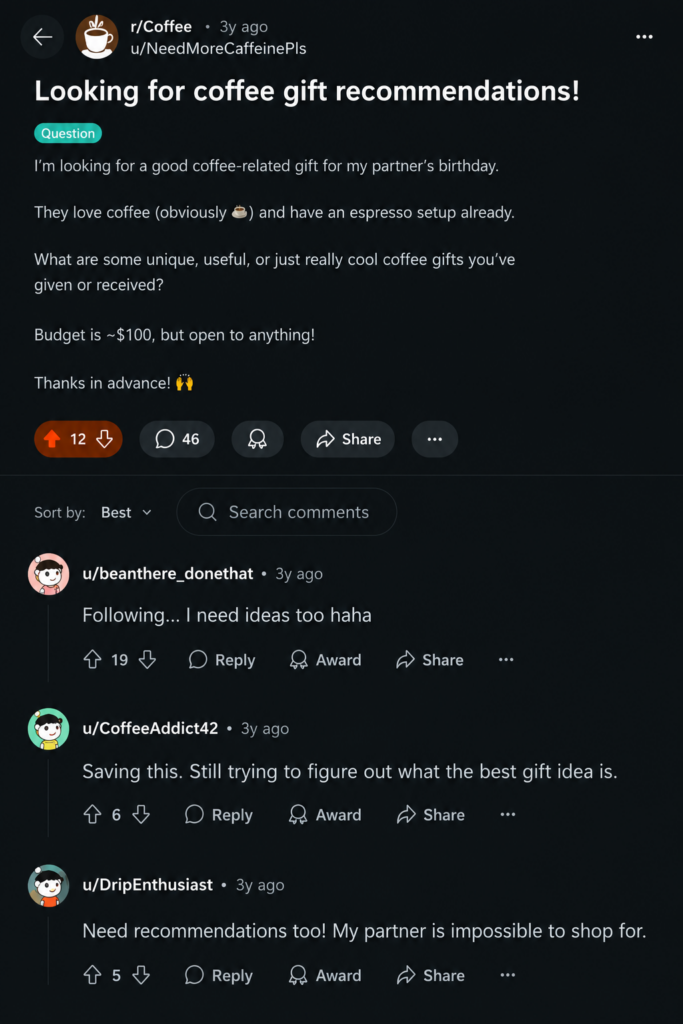
Ce sont ces conversations que vous recherchez - de vraies personnes qui s'intéressent suffisamment à un sujet pour continuer à se manifester. Lorsqu'une niche est remplie de gens qui demandent et que personne ne répond, c'est la chaise vide qui attend que vous la remplissiez.
Où trouver ces conversations :
- Reddit et subreddits de niche
- Serveurs Discord
- Groupes Facebook
- Communautés en ligne
- Forums de niche
- Rubriques de commentaires sur YouTube
- Fils de discussion et pages thématiques de Quora
C'est au cours de ces mêmes conversations que votre stratégie de contenu commence à s'écrire.
Les questions qui reviennent dans les fils de discussion sont les vrais problèmes que votre public essaie de résoudre, les produits qu'il veut comparer et les angles qu'il aimerait que l'on aborde. Chacun de ces fils de discussion est le début d'un article que vous pourriez écrire.
4. Confirmer que le créneau a un réel potentiel de gain
Jusqu'à présent, vous avez évalué un créneau à faible concurrence comme un écrivain - ce qu'il faut couvrir, pour qui écrire et où vous pouvez réellement vous classer.
C'est ici que vous devez l'évaluer comme une entreprise propriétaire.
Car quelle que soit la qualité de l'écriture, de l'audience ou des écarts dans les SERP, tout cela n'a pas d'importance si l'aspect financier de la niche ne peut pas supporter ce que vous êtes sur le point de construire.
Voici comment confirmer chacune d'entre elles avant de vous engager :
- Recherchez “programme d'affiliation [niche]” et voyez ce que vous obtenez. Un mélange d'options signifie qu'il y a de la place pour croître et diversifier vos revenus à travers de multiples flux de revenus. Si Amazon est le seul réseau d'affiliation à proposer des produits pertinents, vous serez rapidement à court de produits à recommander.
- Vérifier si la niche a assez d'un catalogue de produits pour soutenir une bibliothèque de contenu. Quelques produits peuvent suffire pour une poignée d'articles, mais un site d'affiliation a besoin de profondeur pour continuer à produire un contenu utile au fil du temps. Si les cinq mêmes produits se retrouvent partout, la niche s'épuise plus vite que vous ne le souhaiteriez.
- Faites le calcul pour une seule vente. Une commission de 4% sur un produit de $30 équivaut à $1,20 - un chiffre qui nécessite un volume de conversion important pour que vous puissiez y consacrer du temps. Recherchez les taux de commission et les points de prix où une vente met réellement quelque chose de significatif dans votre poche.
- Consulter Google Trends au cours des 3 à 5 dernières années. La stabilité, c'est bien. La hausse, c'est mieux. Un déclin brutal est un signal d'alarme qu'il ne faut pas ignorer - un public qui se réduit signifie un plafond qui se rétrécit pour tout ce que vous construisez.
Si une niche ne répond pas à ces questions, c'est qu'elle n'est pas intéressante et qu'il est préférable de l'abandonner.
Vous n'avez encore rien gaspillé. Le gâchis vient de l'année d'écriture que vous avez perdue. mettre en un créneau peu concurrentiel qui ne lui rapporterait jamais rien.
PrettyLinks suit chaque clic, chaque conversion et chaque commission, de sorte que votre chiffre d'affaires n'est jamais une supposition.
Trouver son créneau à partir d'ici
Le plus difficile dans le choix d'un créneau à faible concurrence n'est pas de faire des recherches - c'est de faire confiance à ce que les recherches vous disent lorsque les chiffres vous semblent plus petits que ce que votre instinct vous dicte.
Un créneau à faible concurrence n'est pas le prix de consolation pour avoir échoué dans un créneau très fréquenté. C'est le lieu où vous pouvez vous faire entendre, où les personnes pour lesquelles vous écrivez vous trouvent et où le contenu auquel vous consacrez du temps a une chance de rapporter quelque chose.
C'est le meilleur point de départ pour presque tous les spécialistes du marketing d'affiliation, non pas parce que c'est plus facile, mais parce que c'est la version du travail qui vous donne un réel retour sur l'effort que vous fournissez.
💬 Quel est le créneau le plus mal desservi, le plus spécifique et le plus rentable que vous avez repéré ? Faites-le savoir dans les commentaires. Voyons qui est tranquillement assis sur quelque chose que tout le monde a manqué.










Laisser un commentaire